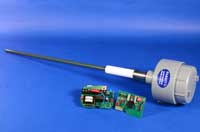
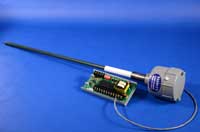
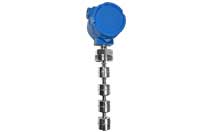
Babbitt manufactures Dual Point RF Level Switches and Multi Point Float Switches for the measurement of liquid level. Both technologies are designed to detect multiple liquid levels in a tank or vessel using a single device. These units are ideal when two or more detection points are needed, but only one entry point into the tank is available. Each instrument should be used in clean, homogeneous (consistent) liquids that do not leave a buildup. Although both the Dual Point RF Level Switch and Multi Point Float Switch have proven successful, choosing the correct instrument will depend largely on the application. To learn more or find out which instrument would be the best fit for your application, contact us directly today!
Multi-Point Level Switch FAQ
What is a multi-point level switch? +
A multi-point level switch is a level sensing device designed to detect multiple liquid levels inside a single tank, vessel, sump, or process system using one instrument. Instead of installing several individual switches, one multi-point unit can monitor multiple alarm points such as high level, low level, pump start, and pump stop conditions. Babbitt's multi-point switches are commonly used when only one tank entry point is available.
How does a multi-point level switch work? +
Multi-point level switches operate by sensing specific liquid levels at predetermined points along a probe. Depending on the technology, this may involve RF sensing or magnetic float switches with reed switches. As the liquid reaches each switch point, the unit sends an output signal to a PLC, alarm, pump, or control system for automated process control.
What is the difference between a dual-point level switch and a multi-point float switch? +
A dual-point level switch typically monitors two distinct levels, often for automatic filling or emptying of a tank. A multi-point float switch can monitor up to four independent liquid levels using magnetic floats on a single probe. The right choice depends on the application, process conditions, and required number of switch points.
What applications use multi-point level switches? +
Multi-point level switches are commonly used for pump control, automatic tank filling and emptying, overflow prevention, wastewater sumps, condensate pots, oil separators, crude oil storage tanks, hydraulic reservoirs, and interface detection applications. They are especially useful in industrial systems that require multiple alarm points for safe operation.
What liquids can multi-point level switches monitor? +
These switches are best used in clean, homogeneous liquids that do not create heavy buildup on the sensing probe. Common monitored liquids include water, chemicals, fuels, oils, wastewater, and process fluids used in industrial applications. Some models can also support interface detection between liquids such as oil and water.
How many switch points can a multi-point float level switch have? +
Babbitt's MLS-4EX Multi-Point Float Level Switch can be configured with up to four independent switch activation levels on a single probe. This provides a cost-effective solution for applications that require multiple level alarms without multiple tank penetrations.
Are multi-point level switches used for pump control? +
Yes, multi-point level switches are frequently used for pump control in tanks, wells, and sumps. They can automatically activate pumps during high-level conditions and stop pumps during low-level conditions, helping prevent overflow, dry run conditions, and equipment damage.
Can multi-point level switches be customized? +
Yes, many multi-point level switches are custom fabricated based on application requirements. Options may include custom probe lengths, flange connections, low specific gravity floats, high-pressure floats, stilling wells, and specialized materials for demanding environments.
What industries use multi-point level switches? +
Industries that commonly use multi-point level switches include oil and gas, refining, petrochemical processing, water and wastewater treatment, food processing, and dry bulk material handling. These systems help improve efficiency, reduce shutdowns, and maintain reliable level control.
Why choose a multi-point level switch instead of multiple single-point switches? +
A multi-point level switch reduces installation complexity, lowers maintenance requirements, and minimizes tank penetrations by combining multiple detection points into one device. This improves reliability and makes the system more cost-effective, especially when space or access to the tank is limited.